Serving Delaware & Surroundings
Retail Space Concrete Lifting & Leveling
Improve Customer Safety and Property Appearance Without Replacement.

Uneven sidewalks, walkways, entrances, and common areas can create liability concerns and negatively impact the appearance of retail properties. Concrete lifting restores settled concrete quickly while minimizing disruption to customers and tenants.

Signs Your Property Needs Concrete Lifted and leveled
- Sidewalk trip hazards are present.
- Concrete has settled near storefront entrances.
- Walkways have become uneven.
- Water is pooling around pedestrian areas.
- Customers have reported safety concerns.
- Settlement is affecting curb appeal.
How We Fix It
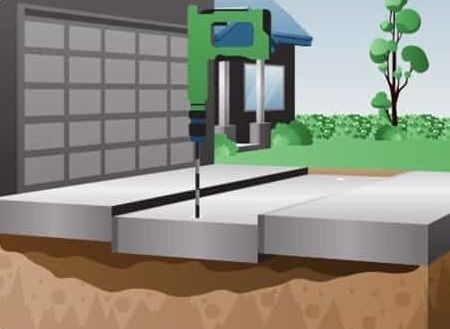
1. Drill Small Injection Holes
We begin by drilling small, precise holes into the sunken concrete slab—this creates access points to inject polyurethane foam beneath the surface.
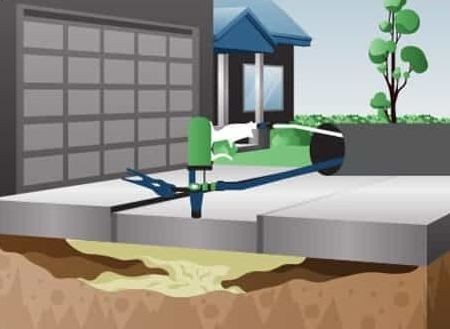
2. Lift and Level the Concrete
The expanding foam gently raises the concrete until it’s level with the surrounding surface. This process is quick, clean, and highly effective for sidewalks, driveways, patios, and slabs.
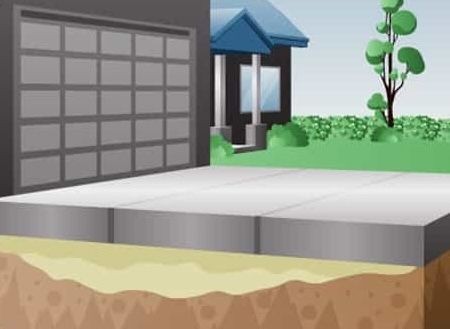
3. Patch Holes and Clean the Surface
We patch the injection holes with durable, color-matched materials and clean the area—leaving your concrete looking smooth, safe, and ready to use. Often in a matter of hours.
Why Choose Concrete Lifting
Improves customer safety
Reduces liability concerns
Enhances property appearance
Minimizes business disruption
More affordable than replacement
Why Choose FoamTech Construction
FoamTech Construction helps retail centers, shopping plazas, commercial properties, and property managers maintain safe, attractive, and functional concrete surfaces.
Why Homeowners & Businesses Trust FoamTech
✔ Local Family-Owned Business
✔ Licensed & Fully Insured
✔ BBB Accredited Business with an A+ Rating
✔ State of Delaware Certified Small & Diverse Business
✔ Certified Women-Owned Business (WBE)
✔ Member of Associated Builders & Contractors
Proudly serving commercial property owners throughout Delaware, Eastern Maryland, Southeastern Pennsylvania, and Southern New Jersey, including Wilmington, Newark, New Castle, Dover, Middletown, Bear, West Chester, Elkton, Claymont, and surrounding communities.
Improve Safety and Preserve Your Property's Appearance
Restore sidewalks, storefront entrances, and pedestrian walkways quickly and cost-effectively without replacing existing concrete.
Proudly serving shopping centers, retail plazas, storefronts, commercial property owners, and property management companies throughout Delaware, Eastern Maryland, Southeastern Pennsylvania, and Southern New Jersey, including Wilmington, Newark, New Castle, Dover, Middletown, Bear, Elkton, West Chester, Claymont, and surrounding communities.
Retail Space Concrete Lifting and Leveling FAQ
Can uneven sidewalks be repaired without replacement?
Yes. Polyurethane concrete lifting can restore settled sidewalks and walkways while preserving existing concrete.
Will repairs affect customers or tenants?
Most repairs can be completed quickly with minimal disruption to daily business operations.
Can concrete lifting reduce liability risks?
Yes. Eliminating trip hazards helps improve pedestrian safety and reduce liability concerns.
Is concrete lifting less expensive than replacement?
In most cases, concrete lifting costs significantly less than removing and replacing existing concrete.
What areas can be repaired?
Sidewalks, storefront entrances, walkways, plazas, patios, and other concrete surfaces can often be restored through polyurethane lifting.
Can retail floor lifting be completed without closing the entire store?
Many projects can be completed in phases or scheduled outside normal business hours to reduce interference with customers, employees, deliveries, and daily operations. Whether the store can remain partially open depends on the location of the settlement, required work area, pedestrian routes, equipment access, and site-safety requirements.
Do shelving, displays, flooring, or store fixtures need to be removed before lifting?
Possibly. The concrete slab and injection locations must be accessible, and floor coverings may need to be removed or opened in the repair area. Shelving, displays, refrigeration equipment, partitions, utilities, or other fixtures may also need to be relocated or evaluated before work begins. Heavy or structurally connected equipment may require additional review.
This website uses cookies to enhance your browsing experience and analyze site traffic. By continuing to use this site, you accept our use of cookies