Serving Delaware & Surroundings
Commercial Concrete Lifting & Leveling
Uneven or settled concrete at a commercial property can create trip hazards, interfere with pedestrian and equipment movement, affect accessibility, and disrupt daily operations. Sidewalks, entrances, warehouse floors, courtyards, and other concrete slabs may settle when the supporting soil shifts, erodes, or develops underground voids.

FoamTech Construction provides commercial concrete lifting and leveling using high-density polyurethane foam. Our process fills voids beneath the slab, stabilizes the supporting area, and carefully lifts eligible concrete toward its proper position with less demolition, debris, and disruption than complete replacement.

Our compact equipment and controlled injection process allow many repairs to be completed while minimizing interference with tenants, employees, customers, students, pedestrians, and ongoing facility operations.


Key benefits of polyurethane concrete lifting
Speed and Efficiency
Projects are often completed in hours,
Durability
Foam resists moisture, erosion, and decay, offering long-term performance.
Minimal Disruption
Small injection holes and low equipment footprint reduce impact.
Cost - Effective
A practical, lower-cost alternative to full slab removal and replacement.
Fast, Clean, and Precise: Foam Concrete Lifting and Leveling Explained
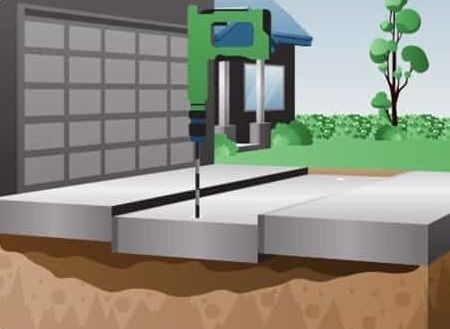
1. Drill Small Injection Holes
We begin by drilling small, precise holes into the sunken concrete slab—this creates access points to inject polyurethane foam beneath the surface.
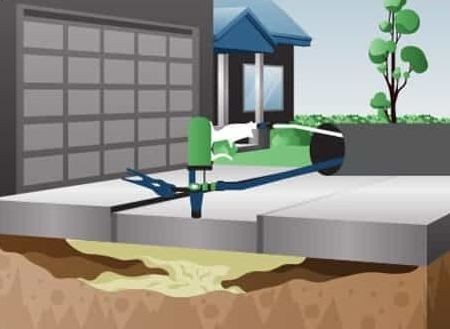
2. Lift and Level the Concrete
The expanding foam gently raises the concrete until it’s level with the surrounding surface. This process is quick, clean, and highly effective for sidewalks, driveways, patios, and slabs.
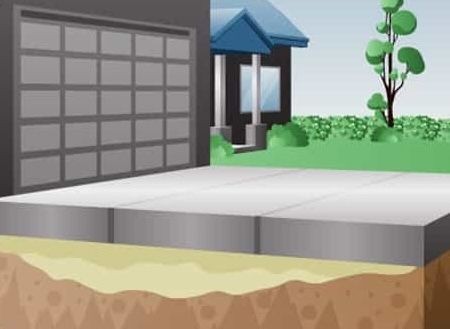
3. Patch Holes and Clean the Surface
We patch the injection holes with durable, color-matched materials and clean the area—leaving your concrete looking smooth, safe, and ready to use. Often in a matter of hours.
Frequently Asked Questions about Commercial Concrete Lifting
What types of commercial concrete can FoamTech lift?
We evaluate commercial sidewalks, entrances, warehouse and industrial floors, apartment-community walkways, retail pedestrian areas, school and campus concrete, municipal sidewalks, courtyards, aprons, and other settled slabs. The concrete must remain sufficiently intact and accessible for lifting.
How do you determine whether a slab should be lifted or replaced?
We evaluate the amount and direction of settlement, slab condition, cracking, expected loads, drainage, access, underground utilities, adjacent structures, and the condition of the supporting area. Concrete that is severely deteriorated, structurally damaged, or unsuitable for controlled lifting may require replacement.
Can commercial concrete lifting be completed without shutting down the property?
Many projects can be organized in phases to limit disruption. Depending on the site, work may be scheduled around business hours, tenant activity, deliveries, school schedules, pedestrian traffic, or facility operations. Access restrictions are determined during project planning.
How soon can the repaired area return to service?
Return-to-service time depends on the location, slab use, expected traffic, and project conditions. Pedestrian areas can often reopen relatively quickly, while vehicle, forklift, loading, or heavy-use areas may require a longer project-specific restriction.
Can concrete lifting eliminate trip hazards or improve accessibility?
Concrete lifting can reduce elevation differences, improve transitions, and correct some drainage or slope problems. However, final accessibility or ADA compliance depends on the resulting slope, cross-slope, clear width, transitions, and other site-specific requirements. Compliance should not be assumed until the finished conditions are evaluated.
Is polyurethane lifting suitable for warehouse and industrial floors?
It may be suitable for eligible settled interior slabs, void filling, and stabilization. The slab condition, rack or equipment loads, forklift traffic, joints, utilities, floor tolerances, and structural requirements must be evaluated before work begins. Some projects may require engineering review.
Is commercial concrete lifting less expensive than replacement?
It is often more cost-effective because it can avoid demolition, removal, disposal, repouring, and extended downtime. The actual comparison depends on the project size, slab condition, access, required lift, operating restrictions, and whether other drainage or soil problems must also be corrected.
Common areas with sunken or uneven concrete slabs
- Sidewalks
- Driveways
- Pool Decks
- Stairs
- Loading Docks
- Warehouse Floors
- Concrete Patios
This website uses cookies to enhance your browsing experience and analyze site traffic. By continuing to use this site, you accept our use of cookies